
A Planter Is Soft
This planter challenges the notion that all planters must be robust and rigid to nurture plants. It reimagines traditional planters by transforming them into soft, flexible forms through cultivating plants on meticulously braided cotton ropes.
Category
Product/ Discursive Design
Duration
13 Weeks
Year
2024
A Planter Is Soft
This planter challenges the notion that all planters must be robust and rigid to nurture plants. It reimagines traditional planters by transforming them into soft, flexible forms through cultivating plants on meticulously braided cotton ropes.
Category
Product/ Discursive Design
Duration
13 Weeks
Year
2024

I. The "At a Glance" Summary
Project Title | Team Details | Duration & Context | Key Deliverables | Methods & Tools Used |
|---|---|---|---|---|
A Planter Is Soft | Project by: | One academic semester of 13 Weeks from January to April 2024, |
|
|
II. The Deep Dive: Process and Rationale
A. Discovery & Research
The project began with a broad inquiry into the ontology of planters—what they are, what they do, and what else they could become.
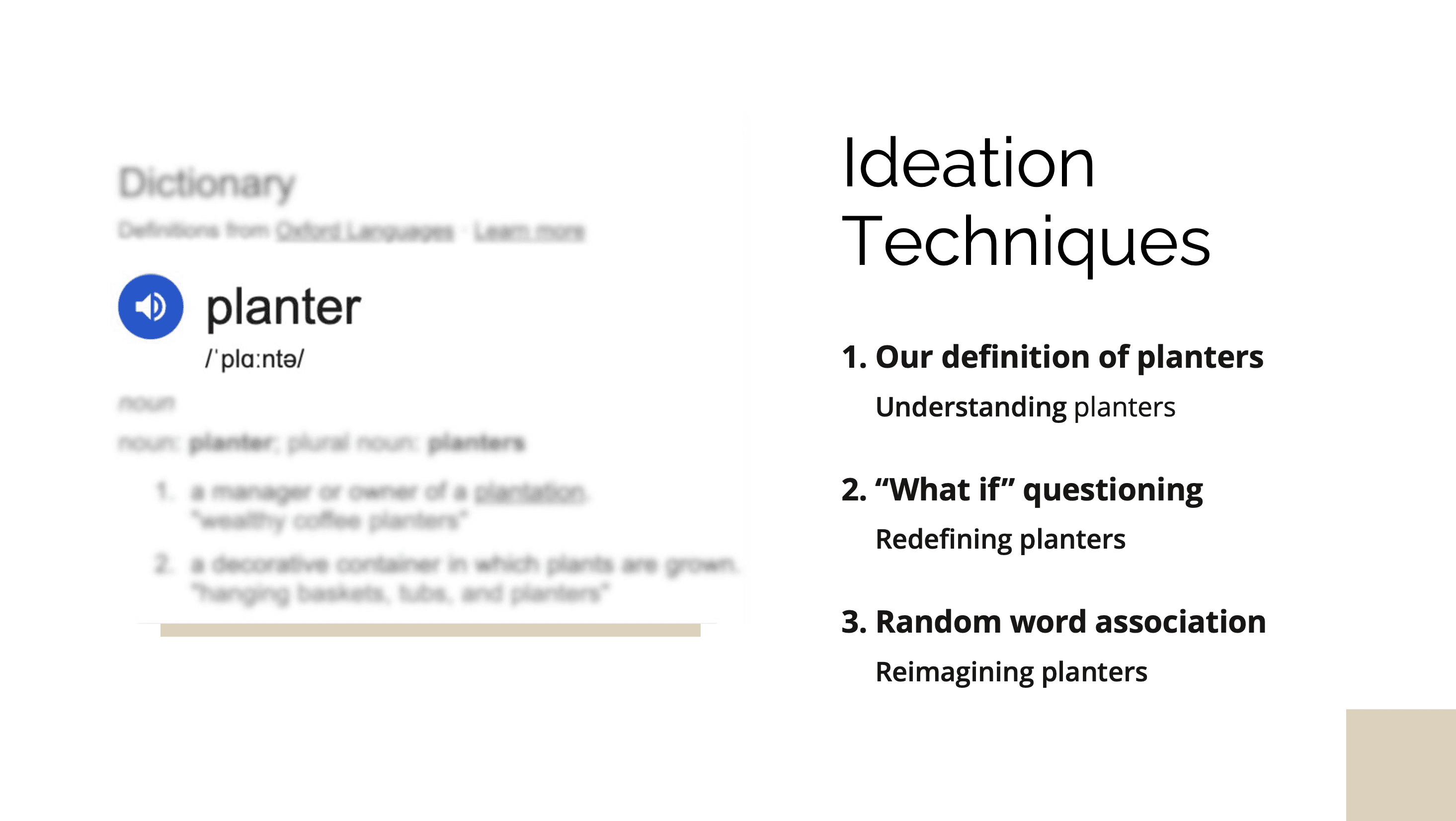
Through rapid ideation and weekly provocations, I explored both literal and philosophical framings of planters, ranging from “A planter is brittle” to “Our indoor is their outdoor” in the first few weeks. This early phase was intentionally expansive as I conducted open-ended research into historical, cultural, behavioural, and material dimensions of planters while benchmarking against existing typologies to avoid unintentional replication.
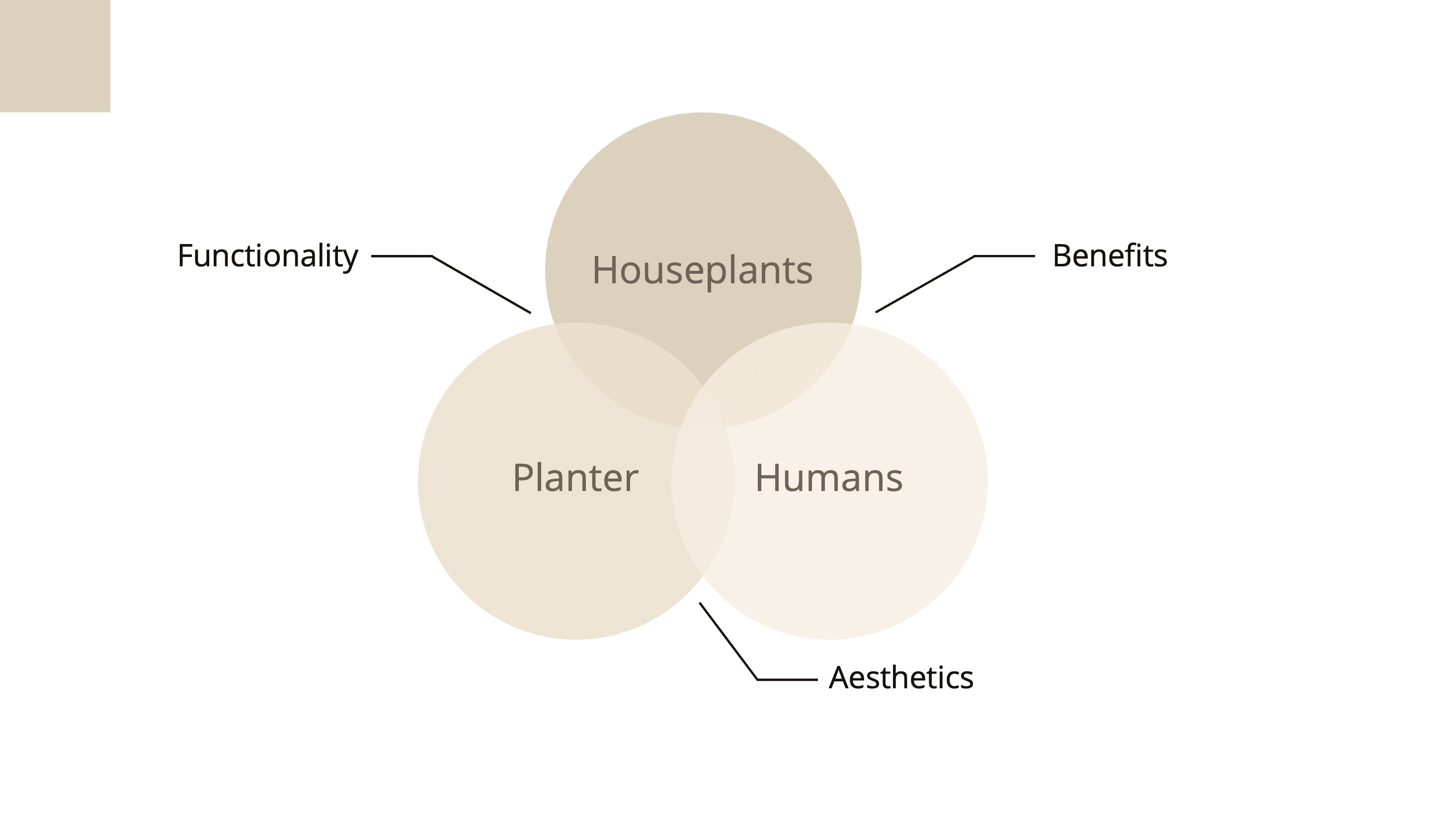
My discovery process eventually surfaced several initial insights, where I found that most planters are designed around human expectations rather than plant needs. Reframing this relationship opened up new design possibilities, allowing planters to be explored as transitional spaces, learning tools, reflections of their owners, and facilitators of plant-to-plant interaction.
B. Define & Ideate
As research deepened, I synthesised recurring themes, such as softness, adaptability, non-containment, and sensory expression, into clear design prompts. Several “What if?” reframings became catalysts for exploration:
What if a planter has no holes?
What if a planter does not contain plants?
What if a planter is part of a puzzle?

Across iterative ideation rounds, I developed and evaluated concepts such as punching-bag planters, terrarium-style planters without drainage, accessory-based micro-planters, and movement-based concepts inspired by 100PLUS cans or screwdrivers. By Week 5, constant benchmarking revealed that several ideas, such as mechanical-movement planters, existed in market variants, prompting a strategic narrowing of the design space.
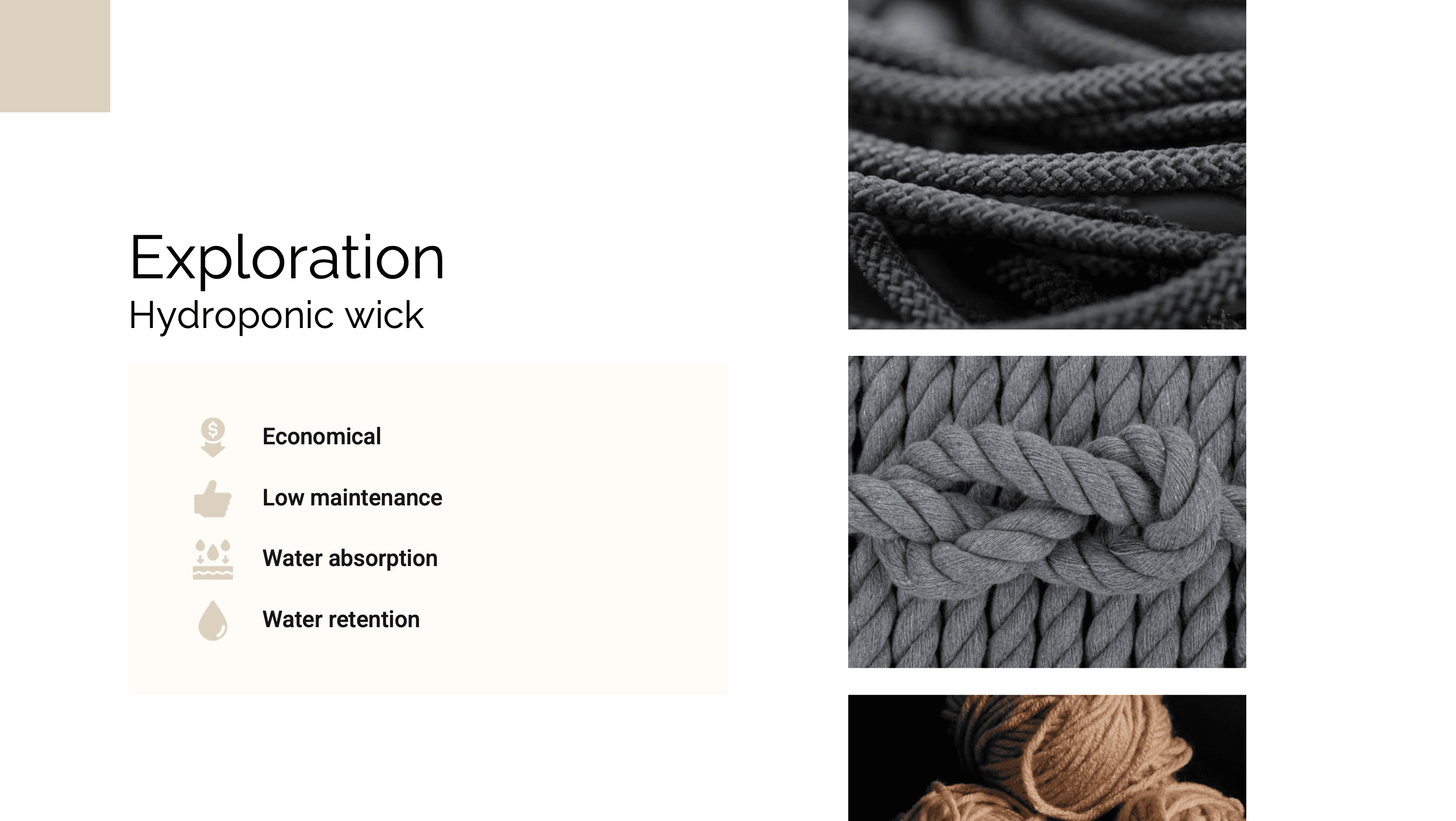
The turning point occurred with the discovery of hydroponic wicks, which reframed softness not just as an aesthetic property but as a functional system for water distribution. Drawing from research into hydroponic wicks and material responsiveness, the project shifted from viewing planters as static containers to reimagining them as living, adaptive structures.
This foundation shaped the project’s eventual direction: to design planters that embody softness, adaptability, and coexistence. Having planters that adapt with the plant, not merely to house it, and led to a new problem definition:
How might a planter leverage softness as both structure and irrigation, enabling plants to grow on, through, and with the planter itself?
This became the anchor for the “soft planter” direction. Two key ideation branches emerged:
1. The Woven Planter
A woven surface functioning as both structure and irrigation system, enabling a variety of plants, particularly water-dependent species, to grow directly on rope.
2. The Braided Planter
A system of knots and capillary joints is formed through braided ropes, functioning as an integrated irrigation system while enabling greater adaptability in the planter’s shape and form.
User testing and material trials gradually showed the braided planter direction offered higher ecological feasibility, greater expressive potential, and stronger conceptual clarity. Thus, I committed to developing the braided soft planter as the final outcome.
C. Develop, Prototype & Refine
The development phase was characterised by intensive prototyping, material testing, and scale experimentation. Key iterations included:
1. Capillary Action Experiments
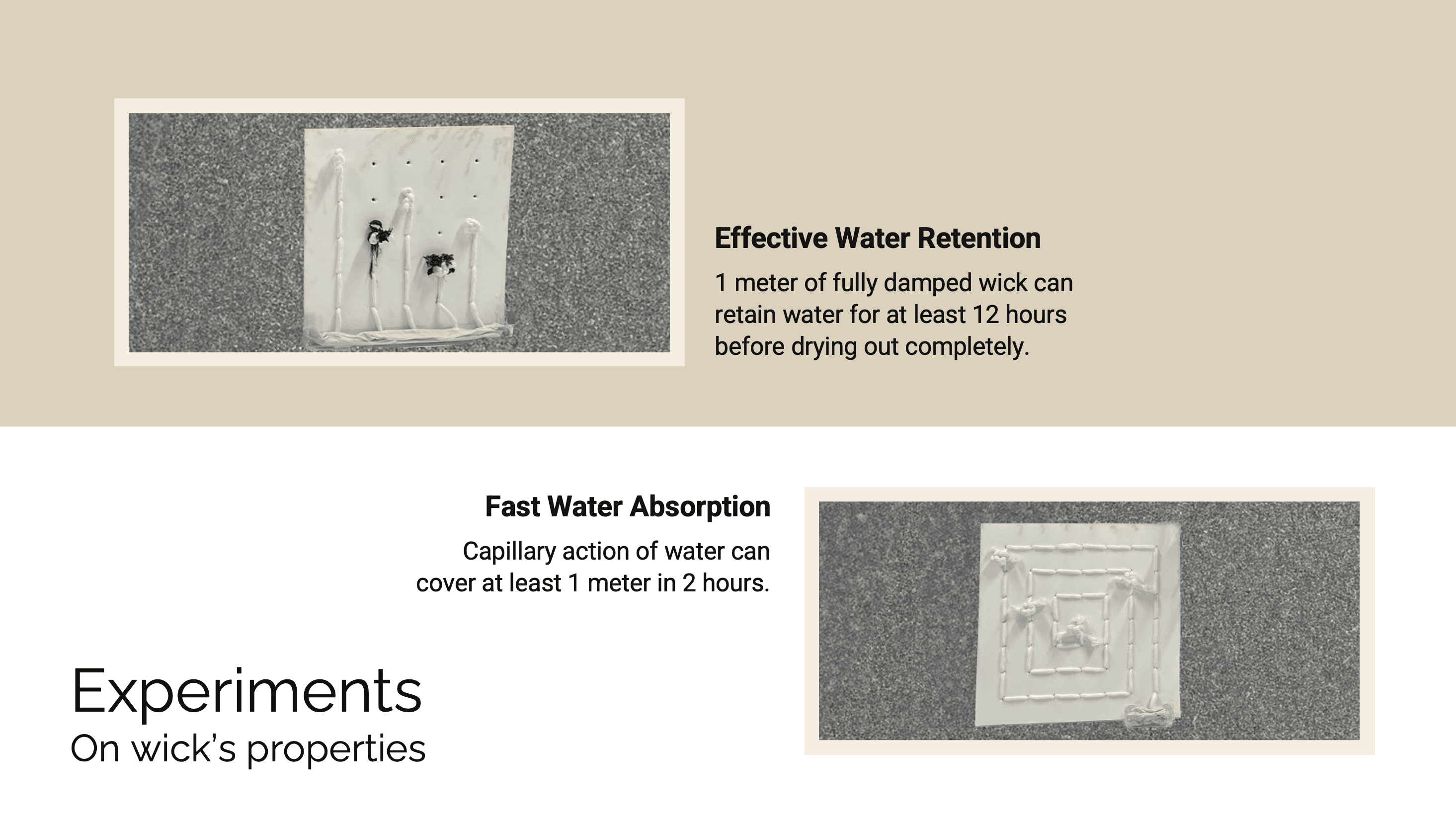
I tested various rope materials, diameters, and knot densities to evaluate water retention, distribution across length, and behaviour under gravity. Results revealed that:
tightly braided sections improved retention,
looser sections enabled root integration,
light-coloured ropes visually communicated moisture levels.
2. Plant Compatibility Trials
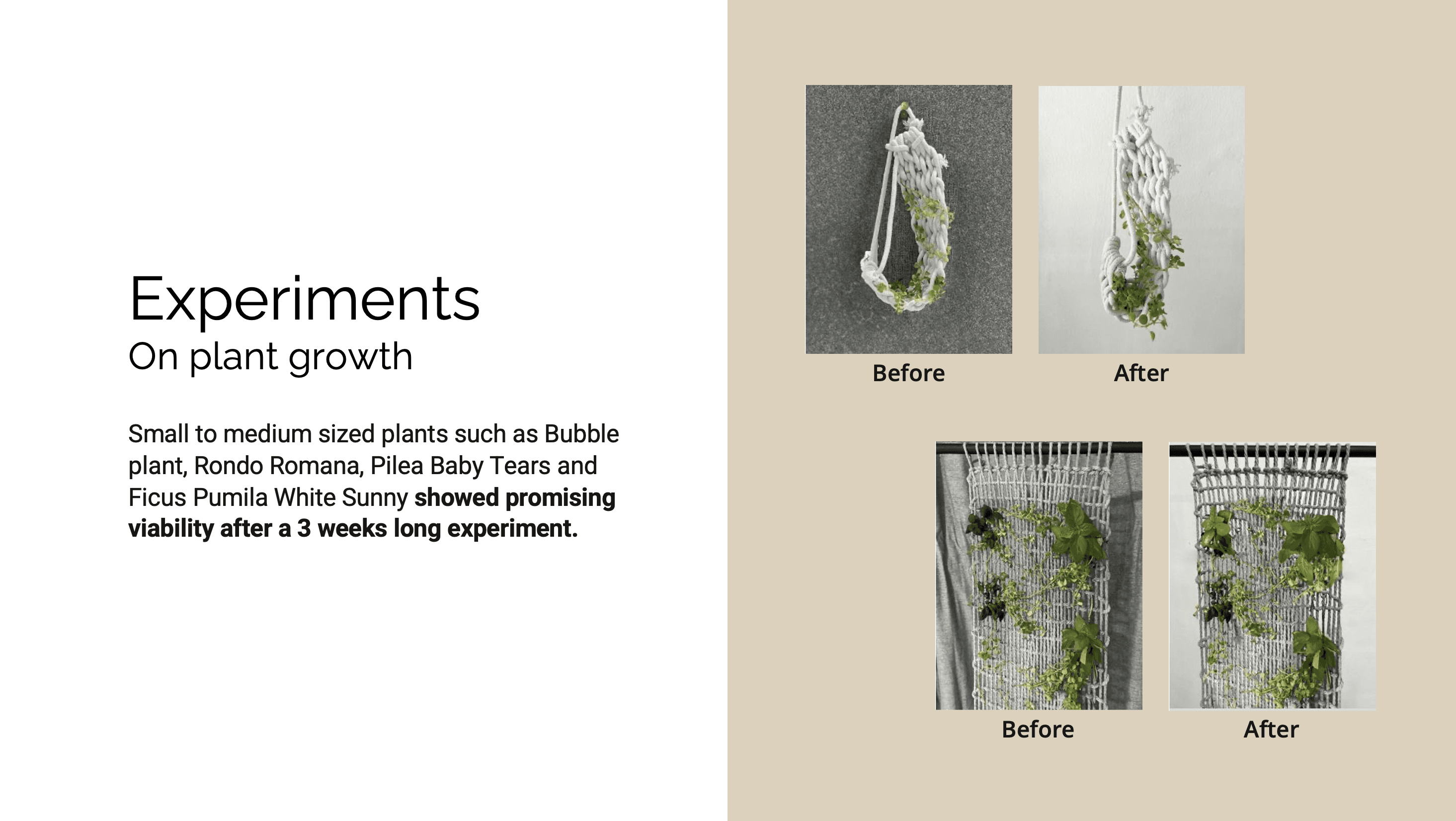
I grew multiple plant species, Bubble plants, Rondo Romana, Pilea Baby Tears, air plants, and Thai basil, directly on braided prototypes to assess survivability. Through weeks of observation:
plants with thicker leaves showed stronger resilience,
basil consistently failed and was eventually removed from the selection.
3. Structural Development & Braiding Techniques
Initial prototypes sagged, collapsed, or warped once the plants were transferred onto the braid. This led to:
testing of zig-zag, grid, and hybrid braid patterns
the refinement of a distinctive “8-shaped” braid that creates secure spaces for plant growth while achieving optimal density for improved water retention.
4. Scaling Up
Scaling the planter to its final 2 m length required addressing constraints in rope availability, braiding complexity, and weight management.
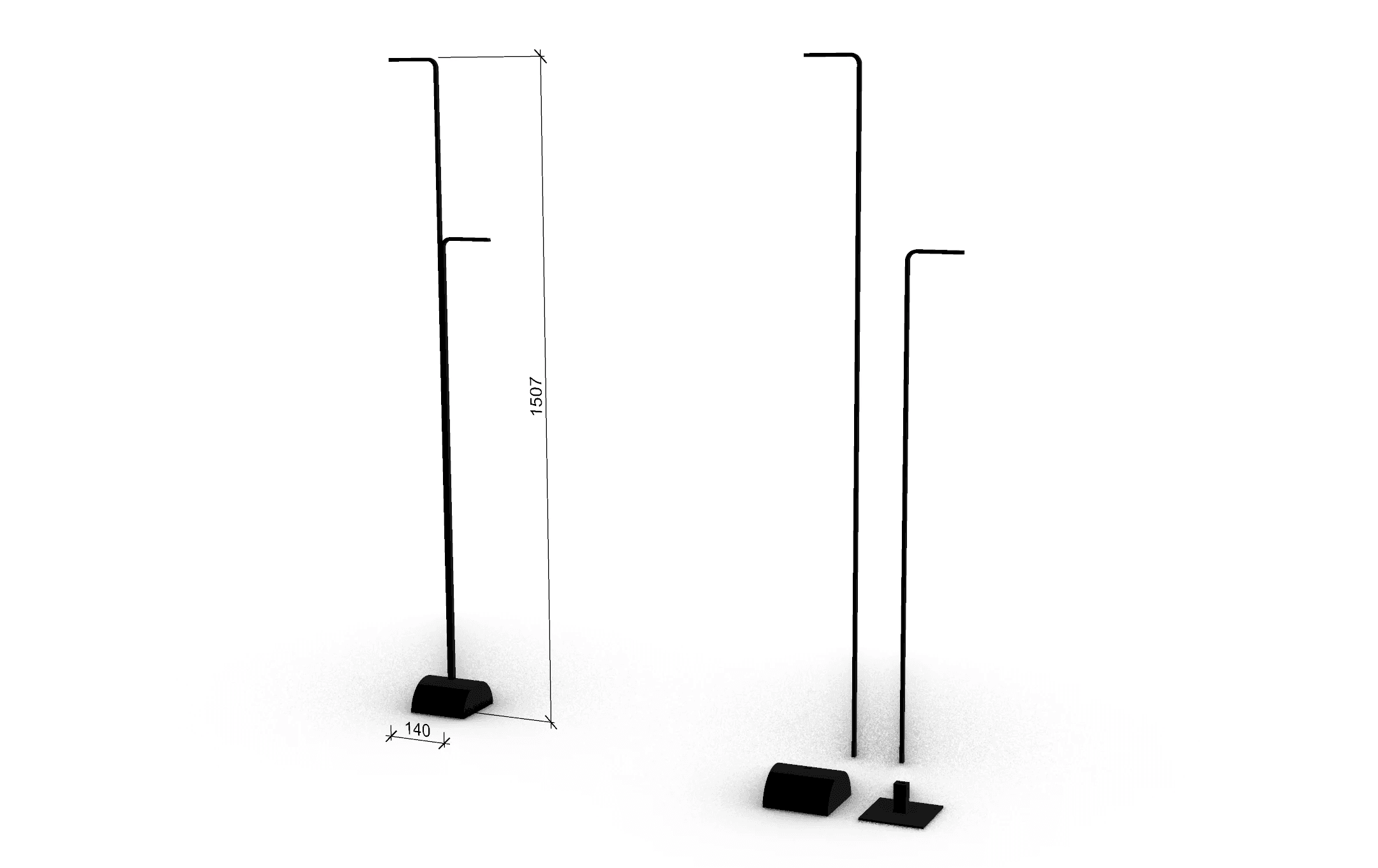
By introducing a carefully designed metal support structure and systematically refining knot ratios and rod thicknesses, I developed a full-scale prototype that:
demonstrates flexibility and adaptability when suspended under its own tension,
supported plants both structurally and in their growth,
retained moisture sufficiently without a built-in reservoir, and
maintained a sculptural, textile-like presence.
Throughout this phase, continuous consultations with Hans Tan, Sheryl Teng, and peers helped refine narrative, resolve technical tensions, and push the design toward conceptual clarity and material honesty.
III. Final Product & Reflection
Leveraging on cotton's ability to absorb and retain water, these twines ensure a continuous source of hydration for the plants' survival. Though seemingly delicate, the tension across the braid keeps each plant securely, offering a unique canvas for personal expression through its vast curation of plants and remarkable physical adaptability. And, this is the Soft Planter.


A Planter Is Soft — PLANT Exhibition during Singapore Design Week 2024 at the National Library
This project taught me to embrace design not as linear problem-solving but as an iterative negotiation between material, process, critique, and intuition. The weeks leading to the final presentation were filled with setbacks, from collapsing braids to dying plants, but each failure revealed new constraints and clearer opportunities.
A key takeaway was the importance of reflection-in-action: stepping back, questioning assumptions, and resisting the pressure to satisfy every piece of feedback. The Soft Planter ultimately reflects not only technical exploration but also my own interpretation of what softness can mean in design, flexibility, resilience, subtlety, and care.
Guided by Hans and Sheryl, reinforced the value of collaborative thinking and critique. The platform became a space of shared experimentation, where diverse perspectives continually sharpened my design decisions.
In the end, the Soft Planter represents more than a final artefact, it embodies a semester-long exploration of material behaviour, ecological empathy, and the poetic possibilities of reimagining everyday objects.