
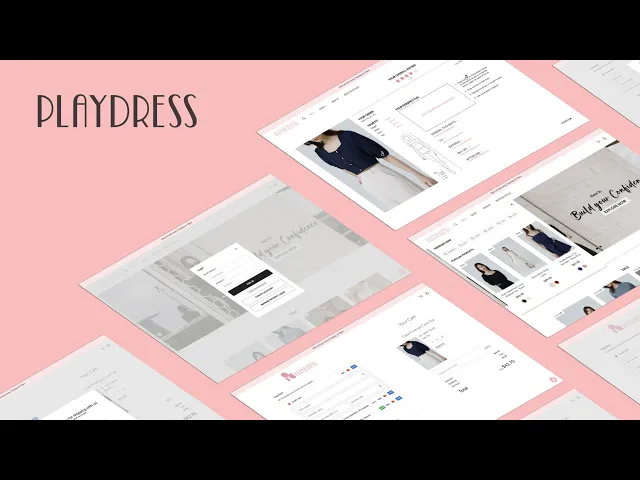
Redesigning PLAYDRESS
Redesigning PLAYDRESS explores how an experience-led e-commerce interface can reduce uncertainty in online apparel shopping and increase users’ confidence in making purchase decisions. Through research, hypothesis testing, and iterative prototyping, the project rethinks how reviews, material information, and visual hierarchy can work together to create a more transparent and engaging shopping journey.
Category
UI/ Service Design
Duration
6 Weeks
Year
2023
Redesigning PLAYDRESS
Redesigning PLAYDRESS explores how an experience-led e-commerce interface can reduce uncertainty in online apparel shopping and increase users’ confidence in making purchase decisions. Through research, hypothesis testing, and iterative prototyping, the project rethinks how reviews, material information, and visual hierarchy can work together to create a more transparent and engaging shopping journey.
Category
UI/ Service Design
Duration
6 Weeks
Year
2023

I. The "At a Glance" Summary
Project Title | Team Details | Duration & Context | Key Deliverables | Methods & Tools Used |
|---|---|---|---|---|
Redesigning PLAYDRESS | Project by: | Half an academic semester of 6 Weeks from March to April 2023, |
|
|
II. The Deep Dive: Process and Rationale
A. Discovery & Research
This project began with an evaluation of the existing Playdress online shopping experience, which, despite being visually clean and easy to navigate, relied heavily on dense textual information and lacked mechanisms that help users assess product fit, material quality, and real-life appearance. Initial analysis revealed that users often defaulted to offline stores for reassurance, highlighting a gap between browsing convenience and decision-making confidence in the online experience

Original website design
To ground the redesign in user needs, I conducted interviews with shoppers across different age groups and shopping habits, including frequent online shoppers, offline-preferred shoppers, and those unfamiliar with Playdress’ online platform. A card-sorting activity was used to understand which factors most influenced purchase decisions. Findings consistently showed that clothing style, customer reviews, and social proof were prioritised over secondary details such as care instructions or virtual try-on features.
B. Define & Ideate
Based on early research, I formulated multiple hypotheses around how users make sense of apparel information online, focusing on materials transparency, filtering and discovery, review authenticity, and engagement through interaction.

Through comparison and prioritisation, I narrowed the focus to two key problem areas:
the absence of meaningful, experience-based customer reviews, and
an overwhelming presentation of information that discouraged exploration.
From this, the design direction shifted toward creating a guided yet flexible shopping experience, where users could either quickly validate a purchase or gradually explore products through layered information. Low-fidelity concept sketches explored ideas such as targeted reviews by attribute (fit, material, aftercare), material close-ups, smarter filtering, and playful yet purposeful interaction cues.
C. Develop, Prototype & Refine
The concepts were developed into a coherent end-to-end shopping flow, covering browsing, product exploration, checkout, and post-purchase review.
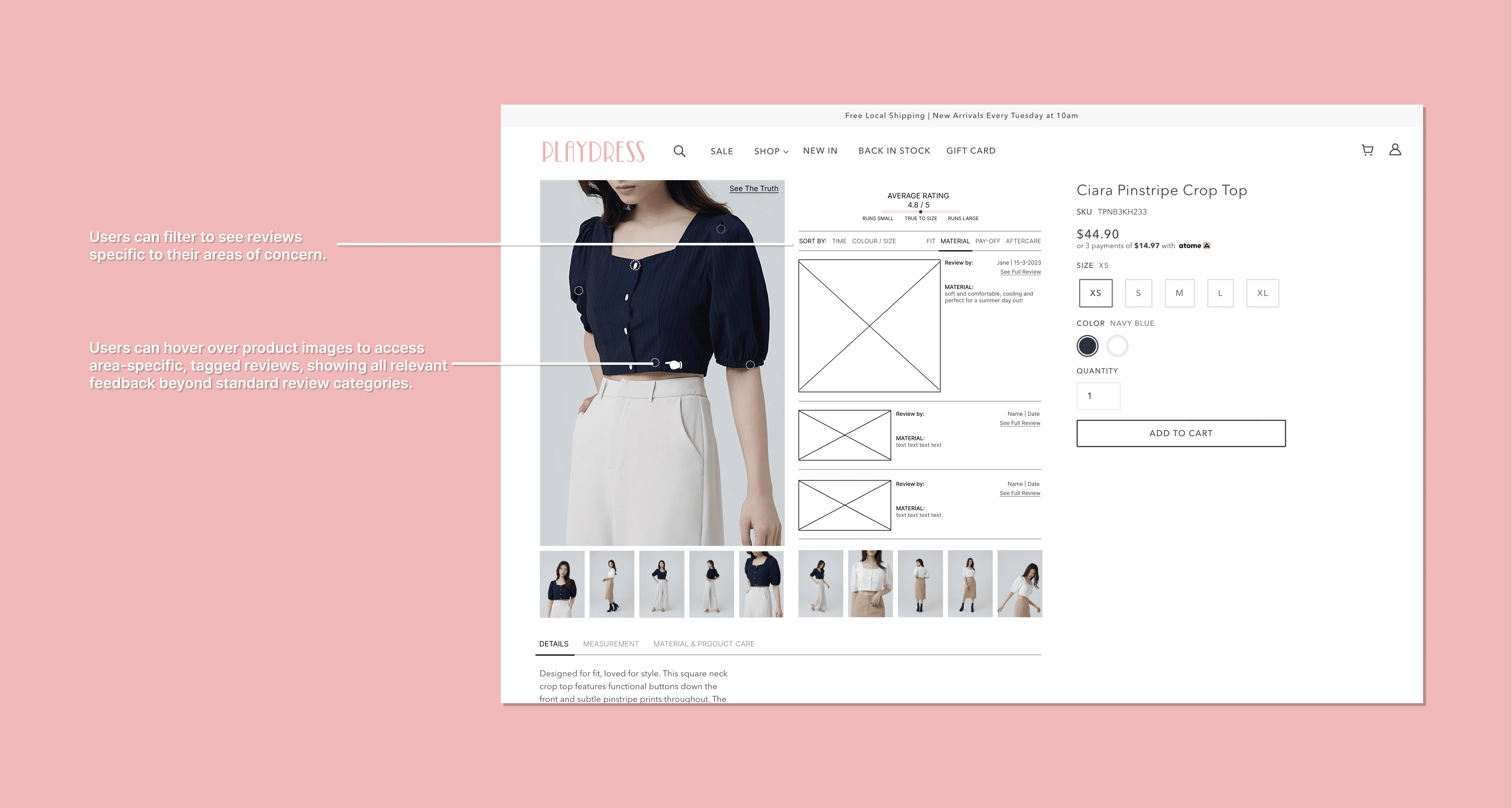
A key intervention was the “targeted reviews” system, allowing users to filter reviews based on specific concerns (e.g. fit or material), reducing cognitive load while increasing relevance.
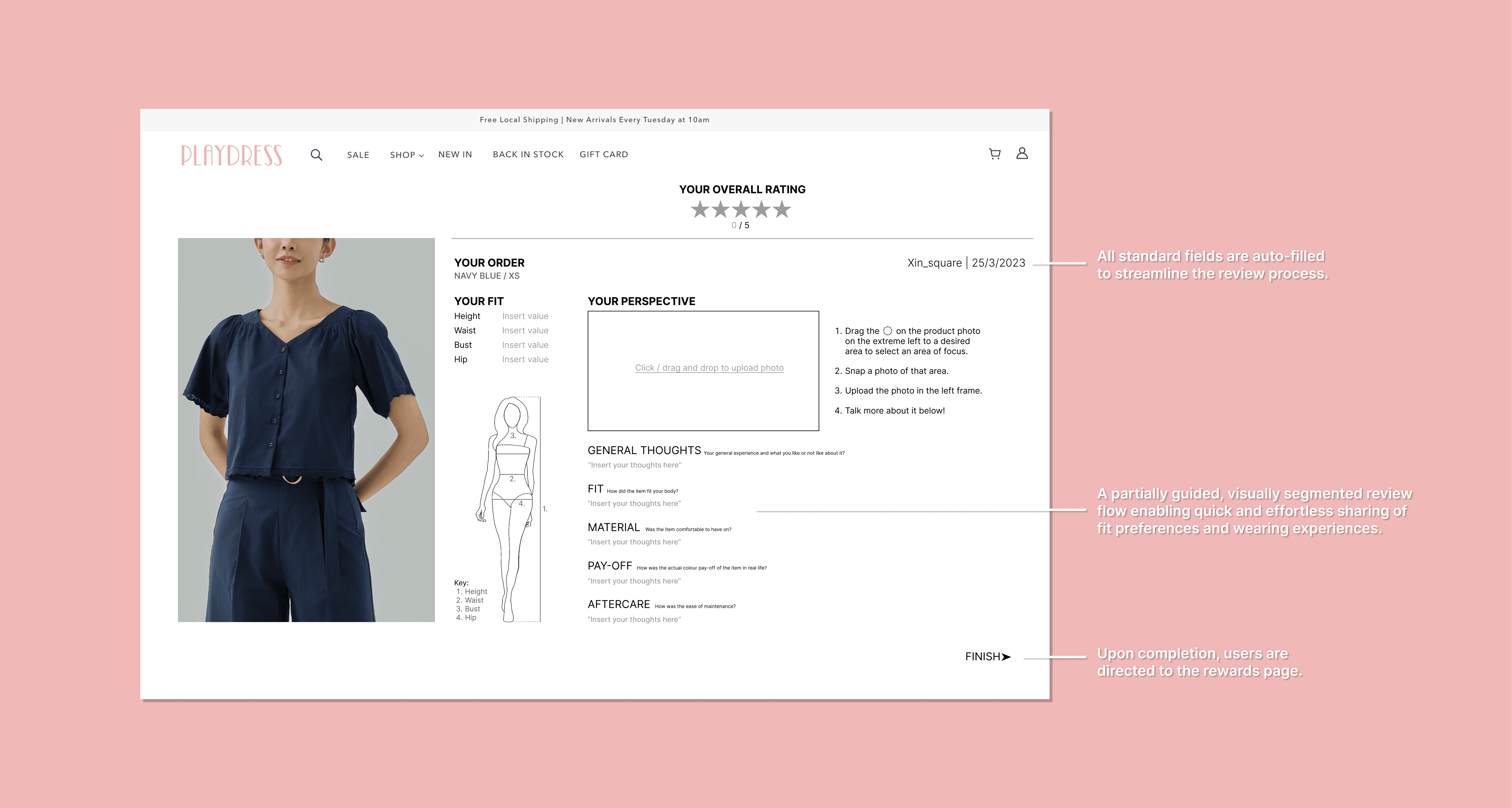
The review submission process was redesigned to be incentivised, guided, visually segmented, and time-efficient, encouraging participation without overwhelming users.
User testing and synthesis revealed critical refinements: excessive images and features reduced clarity, interactive elements needed clearer affordances, and visual hierarchy played a larger role than novelty. In response, later iterations streamlined layouts, reduced unnecessary interactions, replaced long text with icons where possible, and embedded material explanations directly into visuals. These refinements ensured that interaction remained purposeful, not decorative.
III. Final Product & Reflection
The final prototype presents a redesigned Playdress website that balances clarity with exploration. It supports both decisive shoppers and exploratory users through clearer information architecture, experience-based reviews, and visually guided product understanding. Rather than adding features for engagement alone, the design prioritises confidence-building moments throughout the shopping journey.
Value Creation
For users, the redesign reduces uncertainty and mirrors the reassurance traditionally found in physical retail. For the brand, it introduces a scalable review ecosystem that generates authentic content, strengthens trust, and supports long-term customer retention. The project demonstrates how experience design can directly influence perceived product value and decision confidence.
Future Vision
Future iterations could extend this system across omnichannel touchpoints, linking in-store and online reviews while refining data privacy and moderation mechanisms. More advanced personalisation, such as adaptive review ordering based on user intent, could further tailor the experience without compromising clarity or trust.