
(RE)PLACE
(RE)PLACE reimagines NUS’s Bukit Timah Campus as a living circuit that connects people, place, and history through immersive experiences for deeper engagement and greater campus vibrancy.
Category
Service/ Spatial Design
Duration
13 Weeks
Year
2025
(RE)PLACE
(RE)PLACE reimagines NUS’s Bukit Timah Campus as a living circuit that connects people, place, and history through immersive experiences for deeper engagement and greater campus vibrancy.
Category
Service/ Spatial Design
Duration
13 Weeks
Year
2025
I. The "At a Glance" Summary
Project Title | Role & Team | Duration & Context | Key Deliverables | Methods & Tools Used |
|---|---|---|---|---|
(RE)PLACE: Transforming Heritage into Lived Campus Vibrancy | Project Leader of a 3-person team consisting of the following members: | One academic semester of 13 Weeks from August to November 2025, |
|
|
II. The Deep Dive: Process and Rationale
A. Discovery & Research: Uncovering "Dead Spots"
Initial Spark: The project focused on transforming underutilised spaces at NUS BTC and addressing the "Fragile vibrancy within campus".
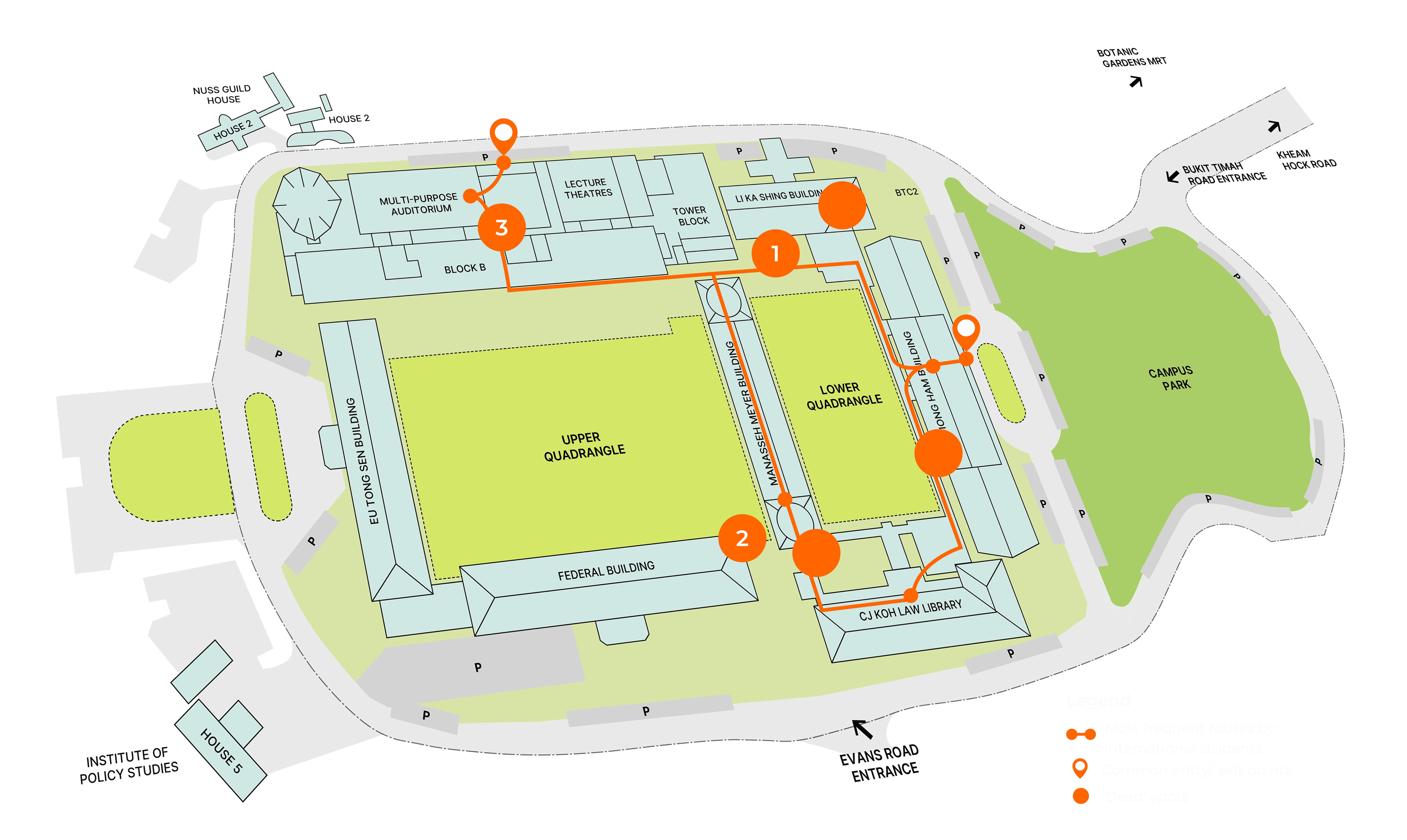
Methodology (User Research): Our comprehensive research strategy, combining primary and secondary sources, pinpointed specific areas suffering from minimal activity and engagement. These 'dead spots' were then designated as strategic focus points for intervention.
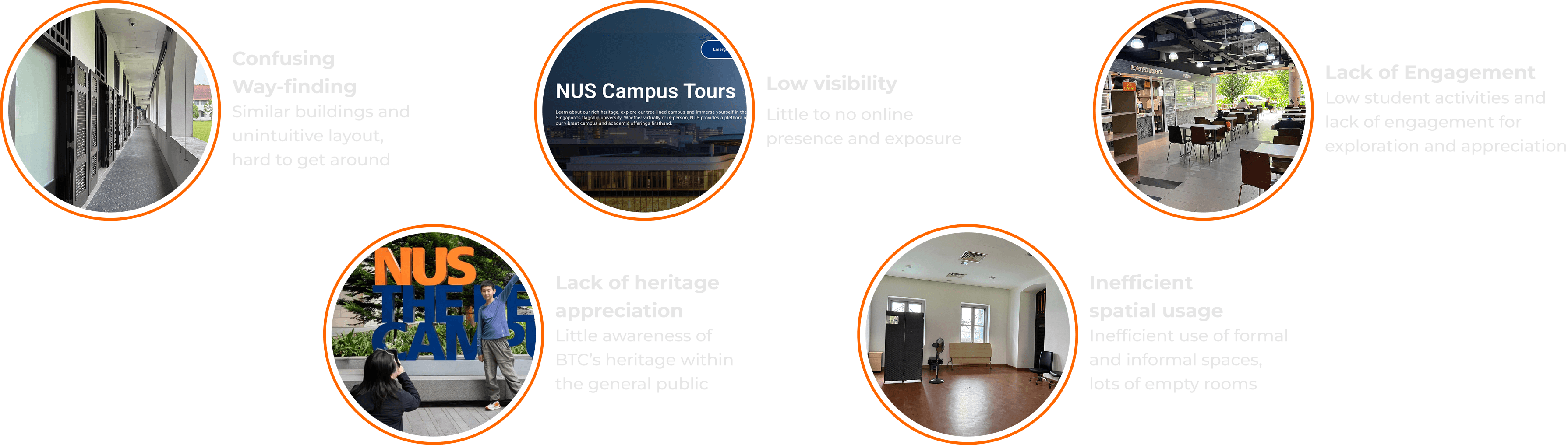
Qualitative Insight: Student interviews revealed a "lack of engagement for exploration and appreciation" and a finding that students "just stay at classrooms and the library".
Spatial Analysis: We categorised the lack of vibrancy into distinct issues like Circulation Gaps (e.g., transitional corridors) , Perceptual Voids (areas perceived as "private") , and Unactivated Zones.
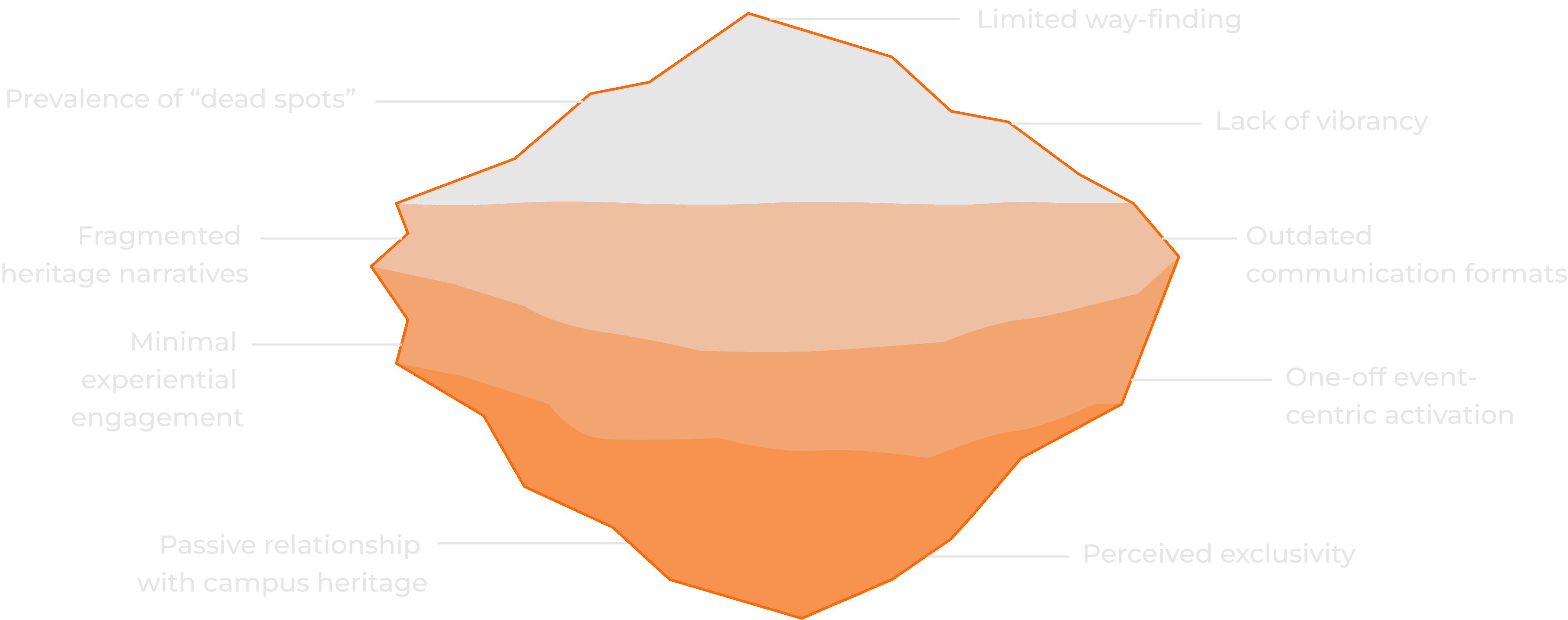
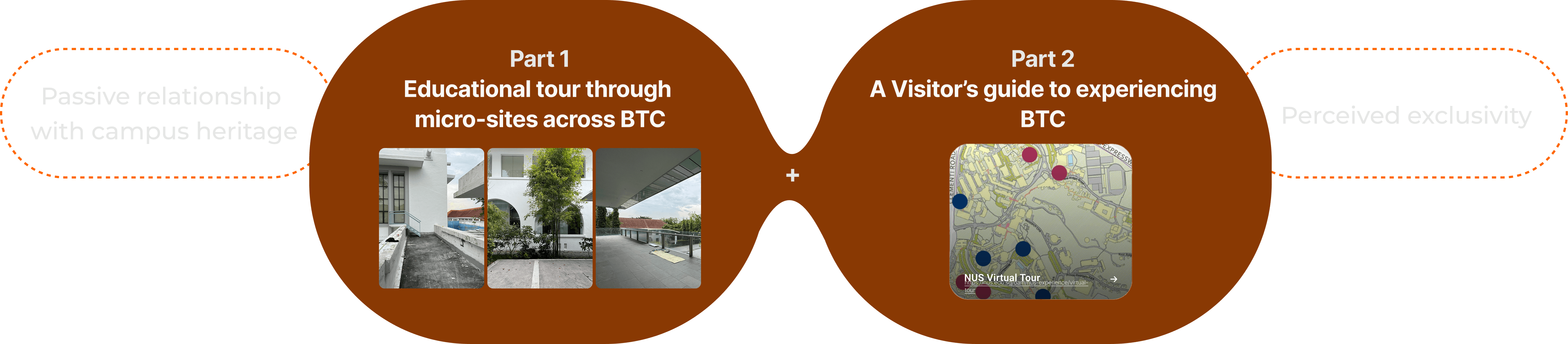
Synthesis (Iceberg Model): We used the Iceberg Model to go beyond surface issues (e.g., "Lack of vibrancy" ) to uncover root causes: Passive relationship with campus heritage , Minimal experiential engagement , and Perceived exclusivity.
Cultural Studies Highlight: We researched cultural case studies (like the Taiwan Sky Lantern Festival and Kyoto Cherry Blossom Viewing ) to define vibrancy not just as liveliness, but as "the emotional and cultural energy that invites people to feel, share, and remember a place".
B. Define & Ideate: Framing Heritage into Experience
Problem Statement: "How Might We transform underutilised spaces at NUS BTC into inclusive destinations that celebrate its heritage and spark campus vibrancy?".
User Personas: We defined two key personas whose needs informed the design:
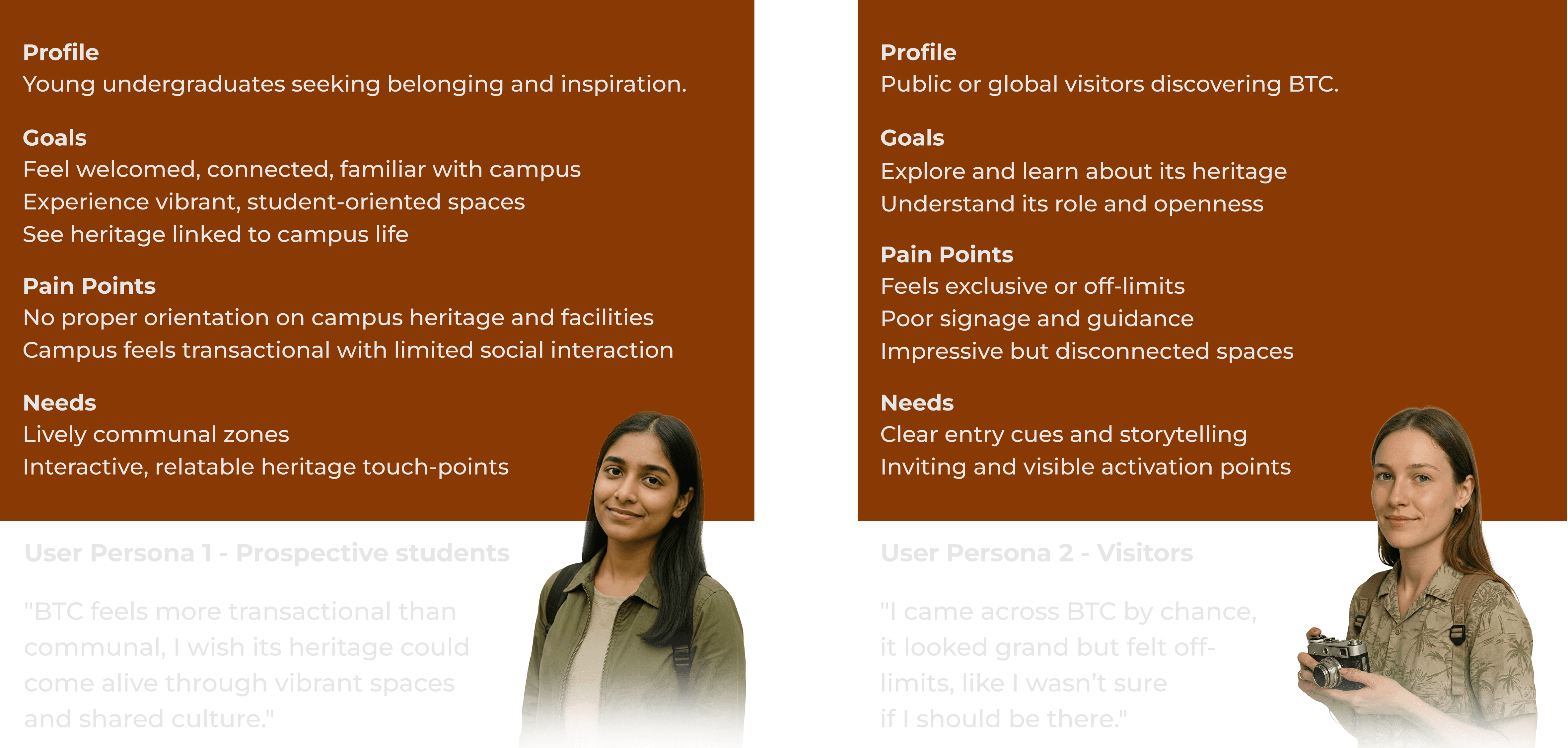
Design Ideation: We moved from abstract concepts to physical interventions by selecting three specific "dead spots" and associating each with a historical era of the campus:
Microsite 1 (Federal Building): 1920s-1930s, embodying Legacy, Tradition, and Memory.
Microsite 2 (Li Ka Shing Building): 1940s, signifying Progress, Exchange, and New Frontiers.
Microsite 3 (Block B Building): 1950s-1960s, representing Resilience, Adaptation, and Renewal.
By addressing the needs of both target users, we distilled two complementary components of our final solution, both leveraging BTC’s rich heritage and history to enhance campus vibrancy.
C. Develop, Prototype & Refine: Experience & Spatial Design
The (RE)PLACE Concept: The concept was a Physical Product Bridging that created a Holistic spatial design with programming and interactive digital components.
Key Interventions:
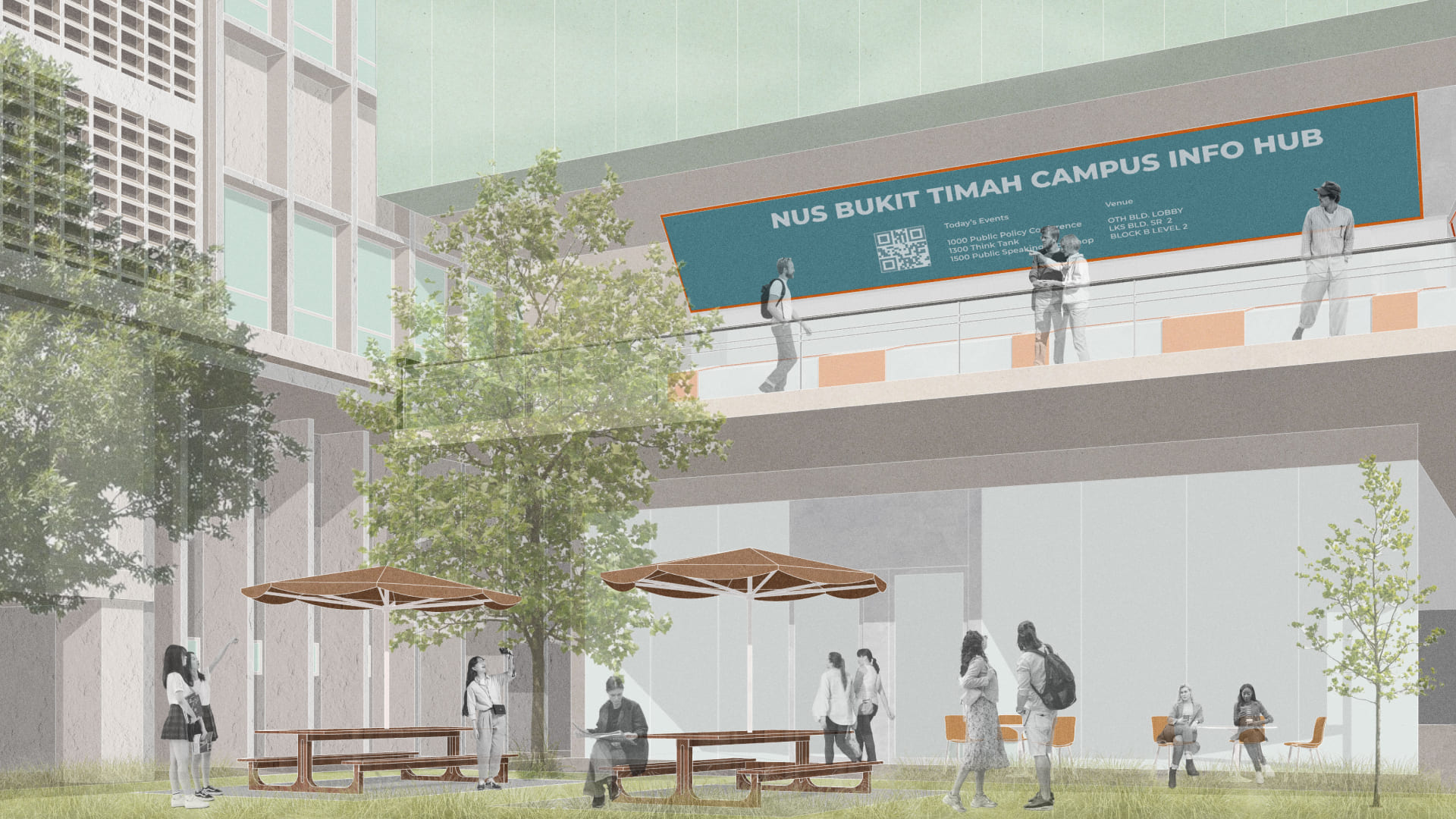
The physical design used standardised modular orange fixtures to contrast with the existing architecture, drawing attention while blurring the line between rest and reflection to encourage deeper exploration.
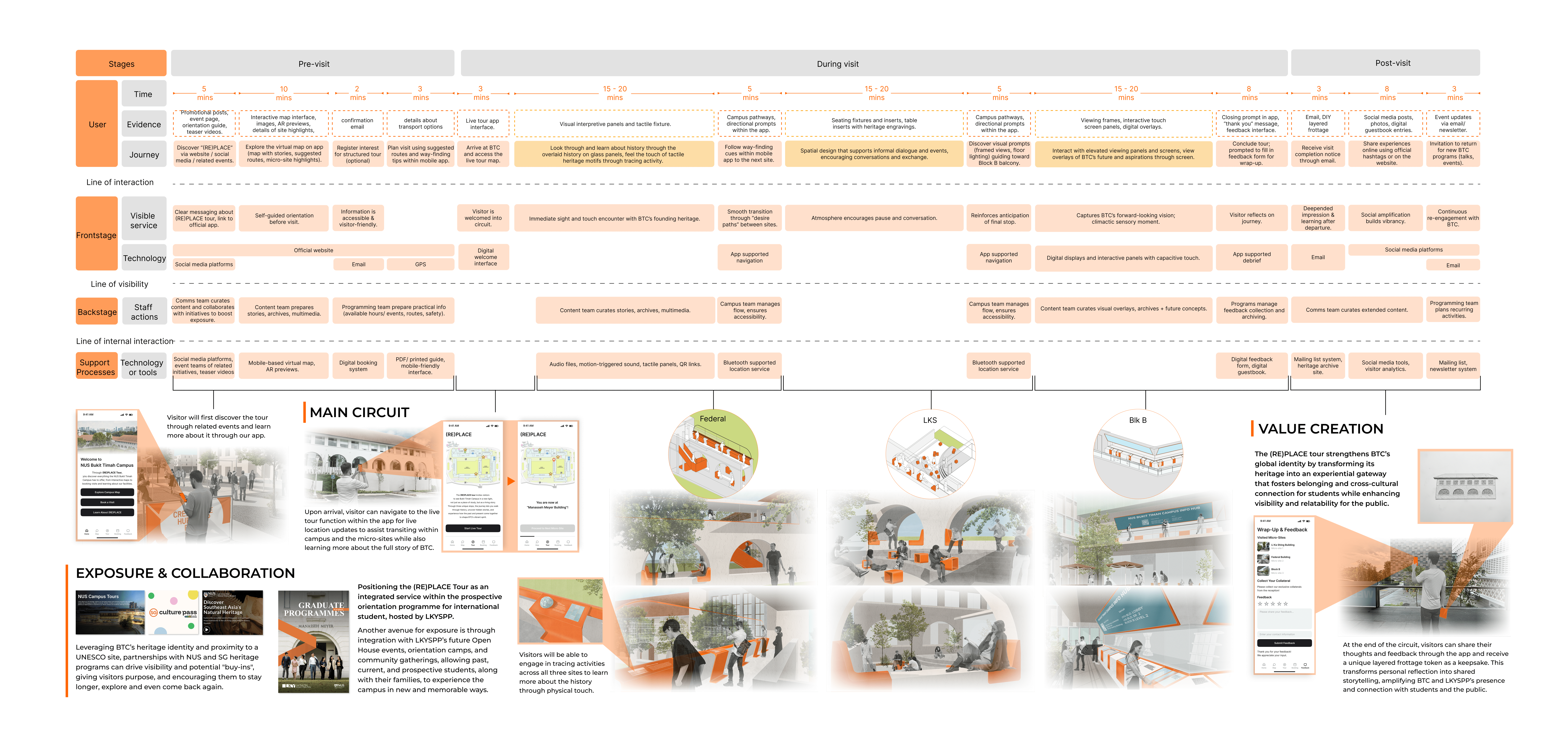
The digital design features a comprehensive virtual guide to BTC and a “Live Tour” function that supports deeper understanding of the campus’s heritage while improving on-site navigation.

Micro-site 1: Federal Building (1920s to 1930s)
This period represents the founding era of BTC, marked by Colonial Style architecture and the generosity of philanthropic donors. It embodies legacy, tradition, and memory — serving as the symbolic “front door” of the campus and anchoring its longest-standing identity.

The journey of (RE)PLACE begins at the Federal Building, where its once grand yet distant façade is reimagined as an active learning environment. Along the arches and elevated walkway, visitors encounter tactile panels, visual overlays, and narrative prompts that uncover traces of BTC’s layered past, beginning from its colonial roots.

The viewing zone lets visitors see BTC through time — blending the past and present into one frame. Visual overlays on transparent panels recreate scenes of the old campus and its former activities, allowing visitors to align historical imagery with the real view before them and imagine how BTC once came alive.

Micro-site 2: Li Ka Shing Building (1940s)
This period represents mid-century expansion, built to accommodate a growing institution and later linked to global philanthropy, Li Ka Shing. It signifies progress, exchange, and new frontiers — extending the existing fabric of the campus in exchange of a better learning environment.

At the Li Ka Shing Building, the intervention transforms the open courtyard into a vibrant communal hub that celebrates connection and exchange. The modular orange fixtures invites users to sit, gather, and engage in spontaneous activities — from casual conversations to performances. Each seating piece integrates subtle interpretive elements, such as engravings and interactive inserts, referencing BTC’s architectural motifs and cultural layers.
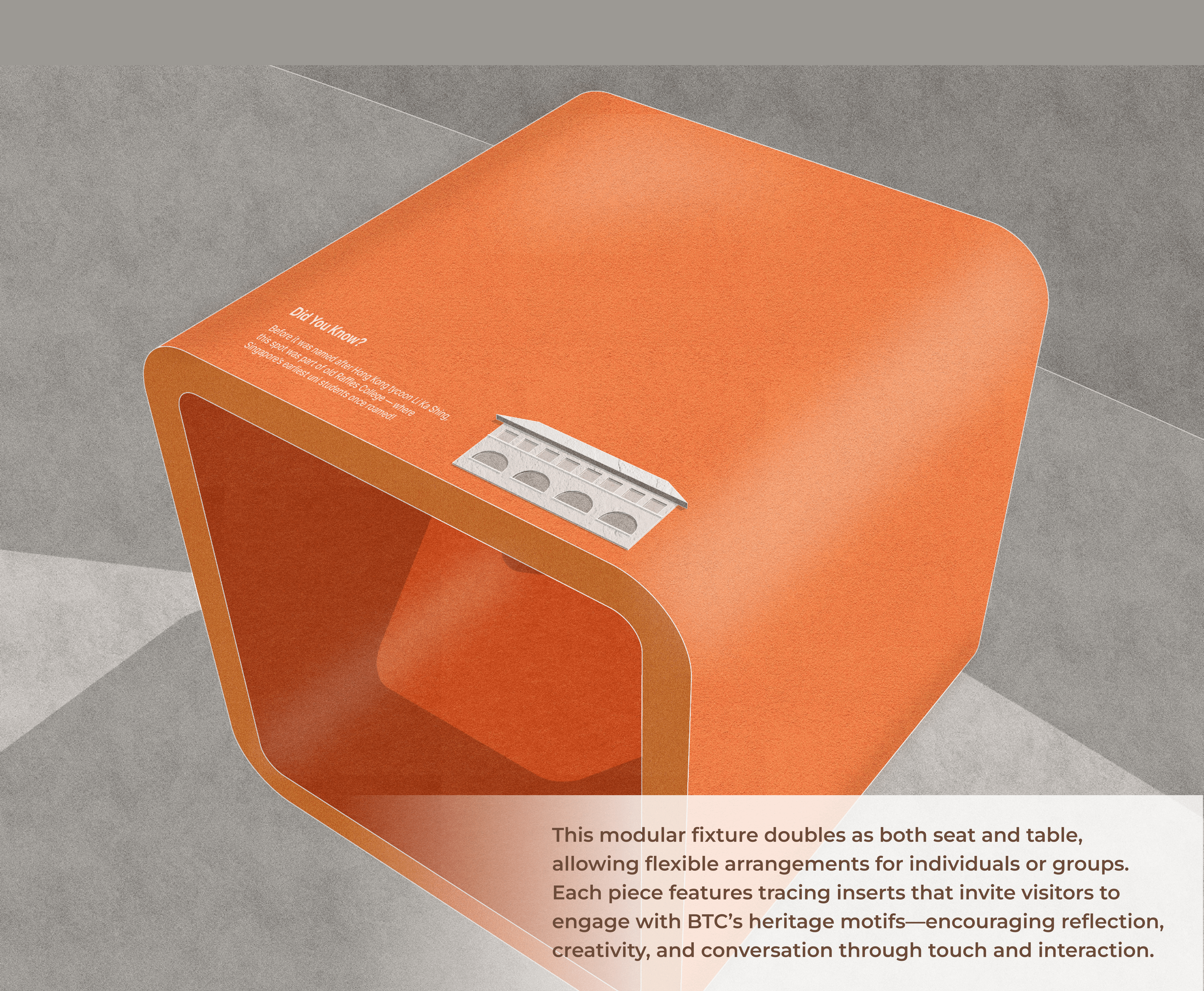
Designed to blur the line between rest and reflection, the space reactivates Li Ka Shing’s quiet arches into a lively node of learning, creativity, and shared experience.

Micro-site 3: Block B (1950s-1960s)
This final period chosen represents BTC’s post-war phase, marked by functional modernist architecture and a pragmatic shift away from colonial grandeur. It is more vertical and forward-looking, offering unblocked views of its surroundings, symbolising resilience, adaptation, and renewal.
Finally, Block B concludes the journey by bridging movement and reflection across different campus levels and historical layers. The elevated balcony features interpretive inserts, interactive screens and vantage points overlooking the courtyard and surrounding buildings, inviting visitors to pause, observe, and connect BTC’s present life with its architectural heritage.

This site marks the transition from reflection to participation — and ultimately, to remembrance and reengagement — linking the heritage narrative of (RE)PLACE with the vibrancy of contemporary campus life.

After the visit, the journey continues as visitors reflect, share their experiences, and stay connected to BTC’s evolving story through digital feedback and a unique DIY layered frottage token that deepens the experience.

UX/Service Design Highlight:
Transformation Framework: A detailed service blueprint mapped the user's journey across Pre-visit, During visit, and Post-visit stages. This showed how digital tools (app navigation, social media) and staff actions support the physical experience, ensuring cross-site cohesion and accessibility.
III. Reflection
Leading this project taught me to translate complex cultural and historical narratives into tangible, user-friendly spatial and interactive design solutions. I learned to view heritage not as a constraint, but as a source of potential that can transform passive remembrance into lived vibrancy.
Value Creation
The (RE)PLACE tour strengthens BTC's global identity and fosters belonging as well as cross-cultural connection. It transforms personal reflection into shared storytelling, amplifying the campus's presence.
Future Vision
The Transformation Framework is designed for collaboration. Next steps would include integration with prospective student orientation programs (hosted by LKYSPP) and leveraging partnerships with NUS heritage programs to drive visibility. This ensures the intervention becomes an ongoing service, not a one-off event.